When George Lucas finished the production of Star Wars VI -"The return of the Jedi" in 1984, he announced that he'll wait with further productions until a new era of computer graphic technology arises which would be powerful enough to make his dreams real (at least on the cinema's screen).
In 1999 he believed that this moment had been come and he released Star Wars I - "The phantom menace". The top striking features of this production (seen from the viewpoint of a computer graphic expert): complete cities, spacecrafts, armies, whole planets and one of the main actors only existent in the memory of computer clusters. Remarkable in comparison to earlier productions is the freedom of interaction between real and virtual parts (the virtual objects draws shadows on real objects and vice versa, real actors could touch (e.g. the tongue, remember the dining scene!) virtual characters). The effects shown in Episode 1 where indeed spectacular, but people going to cinema regularly couldn't be too surprised. Indeed there was a remarkable gain in computer graphics usage in the productions of the last years: remember Titanic (the whole ship!), Gladiator (the ancient Rome - it would have been "mission impossible" to get today's Rome back to the state it had around 0 a.D. - minus smog, minus traffic,...). There have been whole synthetic productions in the last time (A toy's story, Munster's Inc.)!
OK,ok, thats nice to know (and pre-known by the majority, isn't it?), but why a tutorial to "digital illusions" here? Most people own a "normal" personal computer ,
and not a Silicon Graphics Onyx and wouldn't have the money to pay the license fees for professional renderers - and their experiences of today's 3D computer
graphics on their machines (mostly from first-person-shooters like Quake or Metal Gear Solid (o.k. these games are very violent, but they represent the state-of-technology in the
3D real-time sector) still differs a lot from the cinema experience.
 IMHO most users don't know about the numeric power of their machines (not surprising - a typical today's CPU spends a lot of it's lifetime doing word processing, rendering
Hypertext - only games drive them to their limits). But photorealistic images had been rendered by hobbyists on home computers like the Commodore Amiga decades ago, and today's computers
have 100 and more times the numeric power of the MC68000@8MHz processor! (Indeed it had taken days to render a mid-complex scene in these days, but it was funny & possible!).
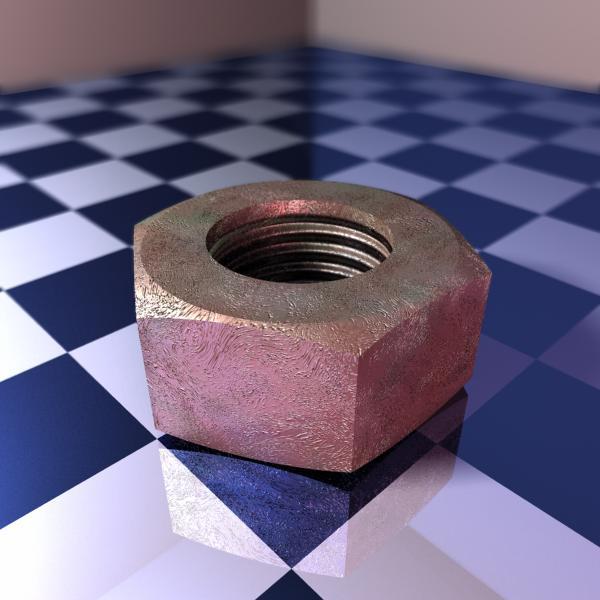
But what about the software now? No problem, some of the best renderers are for free (that shouldn't surprise you, because a lot of good stuff is for free!). You can't believe?
IMHO most users don't know about the numeric power of their machines (not surprising - a typical today's CPU spends a lot of it's lifetime doing word processing, rendering
Hypertext - only games drive them to their limits). But photorealistic images had been rendered by hobbyists on home computers like the Commodore Amiga decades ago, and today's computers
have 100 and more times the numeric power of the MC68000@8MHz processor! (Indeed it had taken days to render a mid-complex scene in these days, but it was funny & possible!).
But what about the software now? No problem, some of the best renderers are for free (that shouldn't surprise you, because a lot of good stuff is for free!). You can't believe?
If the answer is yes, you could do one of these things to get deeper knowledge: